What To Do When Your Car Overheats in Durham, NC
Durham summers are brutal. When temperatures push into the 90s and you're sitting in stop-and-go traffic on I-85 or Hwy 147, your engine is working hard. For some vehicles, that's enough to push the cooling system past its limit. Overheating is one of the most common reasons Durham drivers call for a tow truck in the summer months, and one of the most preventable.
Here's what to do the moment your temperature gauge starts climbing, and when to stop driving and call for help.
Step 1: Act Immediately When the Gauge Spikes
The temperature gauge moving into the red is not something to monitor for a few more miles. The moment you see it spike, take action. Continuing to drive an overheating engine can warp your cylinder head, blow a head gasket, or seize the engine entirely. Those repairs cost thousands. Pulling over costs nothing.
- Turn off the AC immediately; it puts extra load on the engine
- If you're on a highway, signal and move to the right shoulder
- If you're in city traffic in Durham, pull into the nearest parking lot or side street
- Turn on your heater (counterintuitive, but it draws heat away from the engine into the cabin)
- Do not open the hood or remove the radiator cap while the engine is hot
Step 2: Let It Cool Down Before You Do Anything
Once you're safely off the road, turn the engine off and wait. Do not pop the hood immediately. Steam from the radiator is scalding, and the pressurized cooling system can eject hot coolant when opened. Wait at least 30 minutes before touching anything under the hood.
Never remove a radiator cap on a hot engine. The system is under pressure and can spray boiling coolant. Wait until the engine is completely cool to the touch.
Step 3: Check the Obvious Causes
Once the engine has cooled, you can safely check a few things before calling for help:
- Coolant level: look at the plastic overflow reservoir next to the radiator. If it's empty or low, that's your likely culprit
- Visible leaks: look under the car for a puddle of bright green, orange, or pink fluid
- Radiator hoses: check for cracks, bulges, or loose clamps
- Cooling fan: if your car has an electric fan, it should be running when the engine is warm; if it's not, the fan may have failed
Step 4: Know When to Drive vs. When to Call a Tow
If the coolant was simply low and you can top it off (with water in a pinch), the car may be drivable to a nearby shop. But if you see a visible leak, the gauge spikes again immediately after restarting, or you hear a knocking or hissing sound from the engine, stop. Driving further risks major engine damage.
In that situation, call for a tow truck near you in Durham. Getting your car to a shop on a flatbed costs far less than an engine replacement.
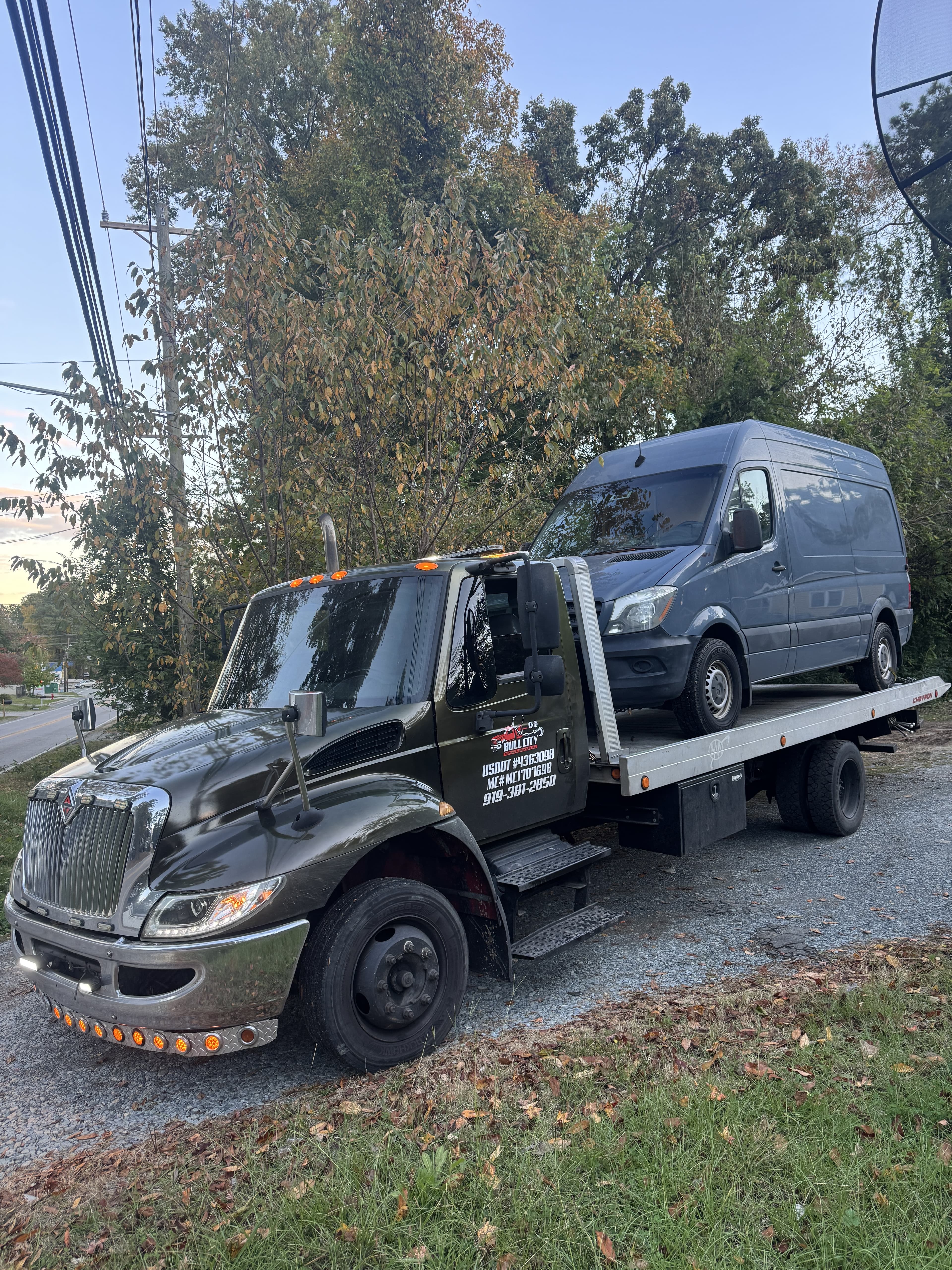
Bull City Towing provides flatbed tow trucks for overheated vehicles across all of Durham. Call (919) 381-2850 and we'll get your car safely to your shop of choice.
How to Prevent Overheating Before Summer Hits
- Have your coolant flushed and refilled on schedule (typically every 30,000 to 50,000 miles)
- Check coolant levels monthly during summer
- Inspect radiator hoses for cracking or soft spots
- Make sure your cooling fan is working before hot weather arrives
- Keep an eye on the temperature gauge, especially in heavy Durham traffic
A few minutes of preventive maintenance in the spring saves you from being stranded on the side of the road in July.
Need a tow truck in Durham?
We answer 24/7. No voicemail, no waiting.
More from Bull City Towing
What To Do When You Need a Tow Truck Near You in Durham, NC
5 min read · April 14, 2025
Safety5 Steps to Stay Safe When You Break Down on I-85 or Highway 147 in Durham
6 min read · March 28, 2025
How It WorksFlatbed vs. Regular Towing: Which Tow Truck Do You Need in Durham?
5 min read · March 10, 2025